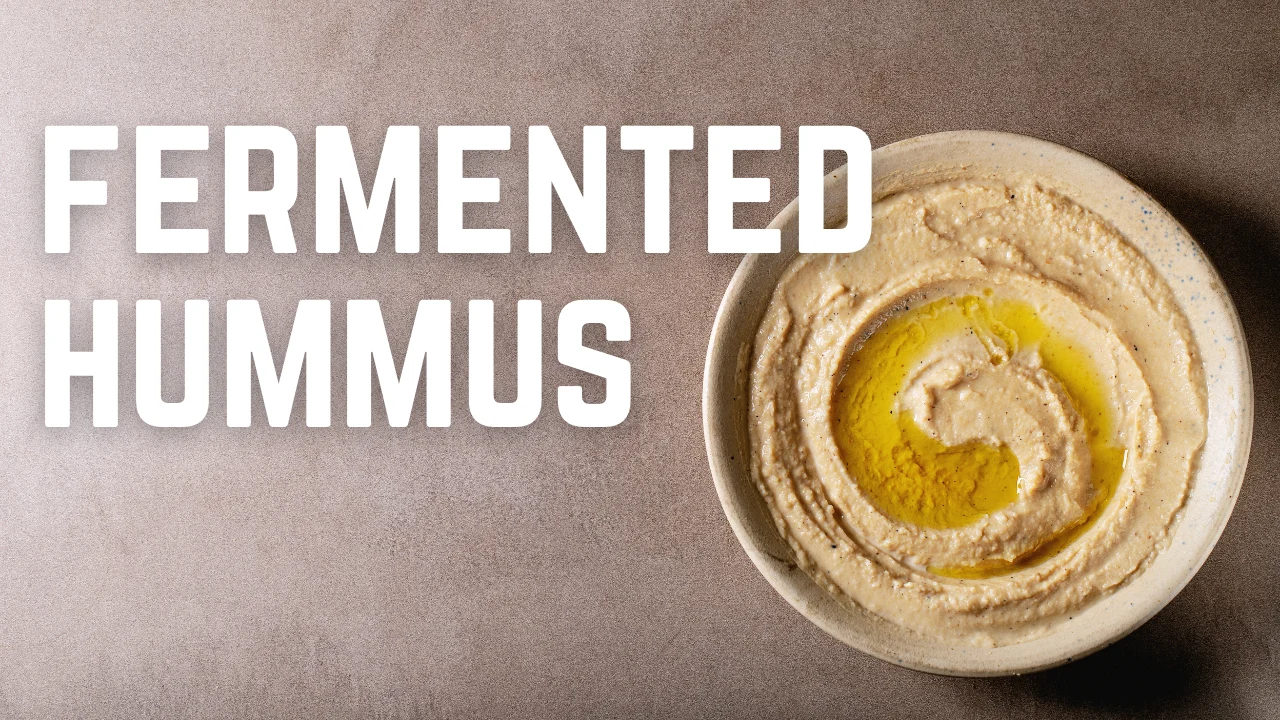
Fermenting hummus turns this beloved dip into a gut-loving superfood by adding natural probiotics that support digestion, immunity, and overall microbiome health. It’s creamy, tangy, and easier to digest than traditional hummus — plus, it’s surprisingly easy to make.
💡 Why Ferment Hummus?
- Boosts natural probiotics and digestive enzymes
- Enhances flavor with a tangy, slightly “cheesy” bite
- Reduces phytic acid and increases nutrient absorption
- Makes chickpeas easier to digest
- Naturally preserves your hummus for longer
🫙 What You’ll Need:
- 500g cooked garbanzo beans (chickpeas)
- 3 garlic cloves
- 3 tbsp (40g) lemon juice
- 3 tbsp (40g) toasted sesame oil (or tahini, if preferred)
- 50–60g bean water (aquafaba from your cooked chickpeas)
- 80–110g liquid starter culture, such as:
- Brine from fermented carrots, sauerkraut, or white kimchi
- Whey from live-cultured yogurt (check label for “live cultures”)
- Unflavored kombucha (store-bought or home-brewed)
- Salt to taste (avoid salt with anti-caking agents)
🥣 Instructions:
- Blend the Base
Add all ingredients except the salt to a high-speed blender or food processor. Blend until creamy and smooth. If needed, add more liquid (either aquafaba or fermenting brine) — but don’t overdo it or you’ll end up with runny hummus. - Season & Transfer
Transfer the hummus to a non-metal bowl. Add salt to taste and mix well. - Cover & Ferment
Cover the bowl with plastic wrap or a clean towel. Leave it at room temperature, out of direct sunlight, for 48 hours. - Check & Store
After 2 days, your hummus will be slightly tangy and probiotic-rich. Stir, taste, and transfer to a glass jar with a tight lid. - Refrigerate
Store in the fridge for up to 2 weeks. Enjoy chilled or at room temp — it pairs beautifully with veggies, crackers, or spread on toast.
🧠 Pro Tip:
This recipe is flexible = you can add cumin, roasted red pepper, turmeric, or fresh herbs after fermentation for additional flavor.